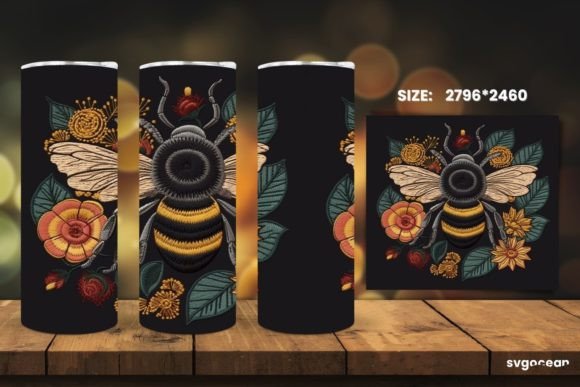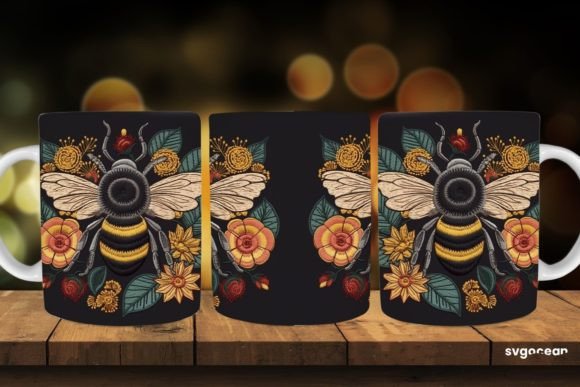
Reviewing Embroidery Bee Mug Wrap Sublimation for Merch
As an embroidery designer who has spent years digitizing logos and testing files for small business owners, I approach every new digital embroidery file with a critical eye. It is not just about whether a design looks cute on a screen; it is about how it performs under the needle, how it holds up in the wash, and how it elevates a brand’s identity. Today, I am reviewing Embroidery Bee Mug Wrap Sublimation, a product listed under Crafts and Graphics, to determine its viability for branded merchandise, patches, and custom apparel.
The first impression of Embroidery Bee Mug Wrap Sublimation is one of playful professionalism. The title suggests a whimsical yet structured aesthetic, likely featuring bee motifs that are popular in boutique markets. For handmade brands, Etsy sellers, and local businesses like bakeries or florists, this visual personality strikes a balance between friendly and premium. It does not feel overly rustic or strictly modern; rather, it leans into a decorative style that appeals to customers looking for unique, handmade product touches. However, because this is marketed as a sublimation wrap with high-resolution PNG assets, we must carefully evaluate how these graphics translate into stitched formats for physical goods.
Real-World Applications for Small Business Merch
When considering small business merch, versatility is key. While the product description highlights an 11 oz mug wrap, the underlying design assets can be repurposed for various commercial embroidery projects if digitized correctly or used as printed transfers alongside stitching. Imagine a local café wanting to brand their staff uniforms. Using the bee motif from this design collection as a chest logo accent on aprons creates immediate brand recognition. The bee symbolizes community, hard work, and sweetness, making it ideal for service-oriented businesses.
For apparel decorators and merch creators, this design could serve as the foundation for embroidered patch production. Patches are a trending asset for boutiques and creative studios because they allow customers to customize their own items. If you extract the graphic elements from the provided ZIP file, you can create a vector-based digitization for a high-quality patch. These patches can then be applied to tote bags, denim jackets, or canvas caps. The tote bag design potential is particularly strong here; a large, central bee emblem stitched onto a natural cotton bag adds significant perceived value to a handmade product.
Furthermore, consider the use of this design for event merch or customer gifts. A bakery could use the bee motif on packaging accents or as a small detail on napkins and labels. By maintaining visual consistency across these touchpoints, you strengthen your brand identity. Customers begin to associate the specific style of the bee with your quality and service, fostering trust and engagement.
Navigating Technical Constraints and Fabric Choices
While the artistic merit of Embroidery Bee Mug Wrap Sublimation is promising, technical execution requires caution. The product description notes a PNG file at 2925 x 1425 px with 300 DPI. This is excellent for printing and sublimation, but for embroidery, we must look deeper. If you plan to stitch this design, you cannot simply use the PNG as an embroidery file. You must digitize it or ensure the package includes compatible machine formats. Since the description mentions a ZIP file with extraction instructions, always verify if actual stitch files (like PES or DST) are included or if this is purely a graphic resource for sublimation.
If you are converting this graphic into an embroidery file, pay close attention to stitch density. Bee designs often feature intricate wings and detailed bodies. On curved surfaces like cap fronts or small patches, high density can cause puckering. I recommend testing the design in black and white first to check contrast and spacing without the distraction of color. This helps identify if fine details will get lost or if the design becomes too bulky.
Fabric texture also plays a crucial role. On smooth twill or polyester blends, the design will appear crisp. However, on textured fabric like heavy canvas or terry cloth towels, small details may sink in. For cap embroidery, use a stiff stabilizer to support the front panel. For apron embroidery on cotton, a cut-away stabilizer ensures longevity through frequent washing. Always confirm the hoop size required before starting production to avoid resizing issues that distort the bee’s proportions.
Enhancing Brand Identity and Customer Trust
Using a cohesive design like Embroidery Bee Mug Wrap Sublimation across multiple platforms enhances professionalism. When a customer receives a mug with a sublimated bee wrap and a matching tote bag with an embroidered bee, the visual consistency signals a well-established brand. This level of detail increases product value and encourages buyer engagement. For Etsy sellers, offering coordinated design assets or finished products can differentiate your shop from competitors who use generic clipart.
Moreover, embroidered items convey durability and care. A well-stitched bee logo on a work shirt or uniform tells clients that you invest in quality. This builds trust, which is essential for small businesses competing against larger corporations. The tactile nature of embroidery combined with the vibrant print of sublimation creates a multi-sensory brand experience that digital-only brands cannot match.
Practical Designer Notes for Production
Before launching any campaign using Embroidery Bee Mug Wrap Sublimation, follow these practical steps:
- Verify File Formats: The description mentions a PNG and ZIP extraction. Confirm if machine-readable embroidery files are included. If not, budget time for professional digitizing.
- Test on Real Fabric: Never skip the test stitch. Run the design on the exact material you plan to use for the final custom apparel or accessory.
- Check Thread Colors: Ensure your thread palette matches the brand colors specified in the PNG. High contrast between thread and fabric improves visibility, especially for small logos.
- Create a Printable Mockup: Use the high-resolution PNG to create a printable mockup for client approval before stitching. This saves time and materials if adjustments are needed.
- Review Licensing: Confirm commercial licensing terms. Ensure you have the right to use the design for sold goods, not just personal crafts.
- Evaluate Size Scalability: Check if the design works at small patch sizes. Intricate details may need simplification for stamps or tiny labels.
In conclusion, Embroidery Bee Mug Wrap Sublimation offers a charming and versatile aesthetic for small business owners. Whether used for sublimated mugs or adapted into embroidered patches and apparel, it has the potential to enhance brand identity and product appeal. By paying attention to technical details like stabilizer choice, stitch density, and file compatibility, you can transform this graphic asset into a profitable line of branded merchandise. Always prioritize quality control and test thoroughly to ensure your finished product reflects the professionalism your customers expect.