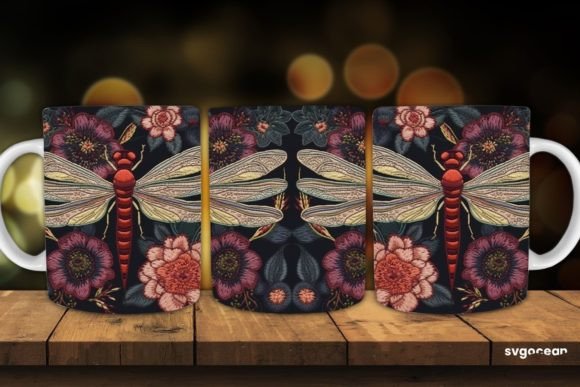
Reviewing the Embroidery Dragonfly Mug Sublimation Design
As a designer who spends half my life digitizing patterns and the other half testing them on actual fabric, I have learned to look past the glossy preview images. When I first encountered the Embroidery Dragonfly Mug Sublimation asset, my initial reaction was one of cautious curiosity. The title suggests a sublimation wrap for an 11 oz mug, yet we are evaluating it through the lens of embroidery and tangible craft application. This disconnect is common in the digital marketplace, where Graphics and Crafts categories often overlap in confusing ways. My job here is to determine if this visual asset holds up when translated from a pixel-based PNG into a thread-based reality, or if it remains strictly a digital print resource.
First Impressions and Visual Personality
The dragonfly motif is a staple in the handmade community. It evokes nature, transformation, and delicate beauty. In this specific design, the layout appears optimized for a curved surface, likely intended to wrap around ceramic. However, for us embroidery designers, the shape and flow matter more than the intended substrate. The silhouette is elongated, with intricate wing details that suggest a high level of complexity. If you were to stitch this directly, the mood would be whimsical yet sophisticated. It fits naturally into projects that require a touch of elegance without being overly formal. Think of a linen tote bag for a summer market or a high-quality cotton apron for a boutique bakery. The visual personality is light, airy, and organic, which makes it versatile for various demographics, from young adults to mature hobbyists.
Real-World Application: Beyond the Mug
Let’s imagine a real-life scenario. You run a small shop selling personalized gifts. A client wants a custom embroidered sweatshirt for a nature lover’s birthday. While the original product description mentions sublimation, the artistic merit of the dragonfly design can inspire a custom embroidery project. If you were to adapt this concept into a machine embroidery design, you would need to consider how the wings translate to thread. Would you use a satin stitch for the body to give it shine and dimension? Would the wings require a delicate fill stitch or perhaps a combination of running stitches and cutwork applique to maintain transparency?
For an Etsy seller, versatility is key. This dragonfly aesthetic works beautifully on tote bag designs, where the large surface area allows for detailed stitching. It also suits baby embroidery on muslin swaddles, provided the scale is reduced and the stitch density is lowered to keep the fabric soft. For holiday embroidery, such as autumn-themed decor, the dragonfly can be paired with falling leaves, creating a rich, textured finished product that commands a higher price point than simple printed goods.
Technical Considerations for Stitching
Here is where practical judgment comes in. The source file is a PNG at 300 DPI. This is a raster image, not a vector or an embroidery file format like PES or DST. This distinction is critical. You cannot simply load this PNG into your embroidery machine. You must use it as a reference to create or purchase a corresponding embroidery file. If you attempt to auto-digitize this complex image without manual cleanup, you risk creating a dense, stiff patch that puckers the fabric.
When planning your embroidery project, pay close attention to stitch density. Dragonfly wings are inherently fragile-looking. Over-stitching them will make them look like solid blocks of color rather than translucent membranes. I recommend using a lighter weight thread, such as 40wt polyester, to maintain definition. For the body, a metallic thread could add a stunning effect, mimicking the iridescence of a real insect. Always test on scrap fabric first. Check how the thread colors contrast against your chosen background. A dark navy sweatshirt might require lighter threads for visibility, while a cream-colored kitchen towel might benefit from earthy greens and blues.
Fabric and Hoop Constraints
Not every fabric is suitable for detailed insect motifs. Textured fabrics like terry cloth or heavy wool can obscure fine details. For this design, smooth cotton, linen, or stable blends work best. If you are working with stretchy fabric, such as jersey for a t-shirt, a cut-away stabilizer is non-negotiable to prevent distortion. Curved surfaces, like caps, present another challenge. The elongated shape of the dragonfly might distort if placed on the front panel of a baseball cap unless the design is scaled down significantly. For embroidered patches, however, this shape is ideal. You can stitch it on a sturdy twill backing, cut it out, and apply it to any garment, bypassing the limitations of direct-to-garment stitching.
Be mindful of hoop size. Ensure your design fits comfortably within your machine’s maximum area, leaving room for stabilization. If the design is too large for your hoop, you may need to split it, which is rarely successful for organic shapes like dragonflies due to alignment issues.
Commercial Viability and Brand Consistency
For craft business owners, the perceived value of a design lies in its execution. A poorly stitched dragonfly looks amateurish; a well-executed one looks luxurious. Using this motif can enhance your brand consistency if your shop focuses on nature-inspired or bohemian styles. It adds to the giftability of your items. Customers are more likely to purchase a personalized gift that features unique, handcrafted details rather than mass-produced prints. However, always verify licensing. Since this product is sold as a digital graphic, ensure you have the right to use the visual concept for commercial embroidery sales. Some licenses cover only personal use, while others allow for finished physical products but prohibit reselling the digital file itself.
Final Designer Notes
Before committing to a full production run, create a printable mockup to visualize the placement. Compare how the design looks on light versus dark backgrounds. If you are digitizing this yourself, pay attention to the underlay stitches to ensure stability. If you are buying a pre-digitized version, check reviews for comments on thread breaks or registration issues. Remember, the goal is to create a handmade product that feels intentional and high-quality. Whether you are making custom apparel, decorative pillows, or boutique merchandise, the dragonfly remains a powerful symbol. Treat it with the technical respect it deserves, and it will elevate your design assets from simple decorations to standout pieces of art.
In conclusion, while the Embroidery Dragonfly Mug Sublimation is marketed for printing, its artistic value translates well into the embroidery world if approached with technical precision. Use it as inspiration, respect the material constraints, and always prioritize stitch quality over speed. Your customers will notice the difference.